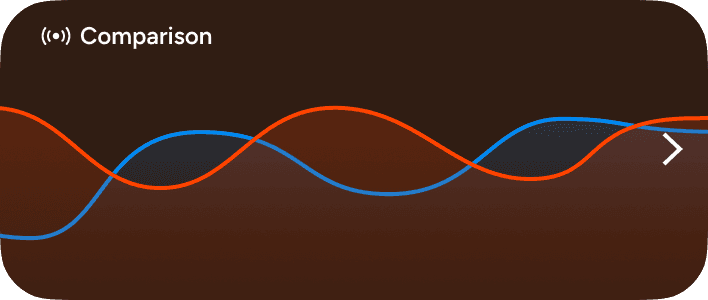
Comparison
How it works:
Comparison puts two time periods next to each other and lets the numbers speak. Pick February and March. Or January 2025 and January 2026. Or go deeper — compare just your restaurant spending between two months, or just transport, or just groceries. The widget adjusts to whatever level of detail you want.
The side-by-side view makes changes immediately obvious. Spent €380 on dining out in February and €210 in March? You'll see it. Total spending up 15% year over year? It's right there. That gradual creep in your entertainment category that you wouldn't notice month to month? Comparison catches it because it puts the evidence next to each other.
This isn't about judging yourself — it's about seeing trends you'd otherwise miss. Some trends are great. "I've spent less on impulse purchases three months in a row." Some are worth knowing. "My grocery bill has quietly doubled since last year." Either way, you can't respond to a pattern you can't see. Comparison makes them visible.
Why people love it:
Because it turns vague feelings into facts. "I feel like I spent more this month" becomes "I spent €140 more this month, and most of it was transport." That precision is empowering — it tells you exactly where to look if you want to change something, and exactly where to celebrate if things are improving.
It's also the widget that makes long-term progress feel real. When you can compare this March to last March and see your spending habits genuinely improving, that's not just data — that's proof that what you're doing is working.
Perfect for:
People who want to track whether their spending is improving over time. Anyone curious about seasonal patterns in their finances. People who make changes to their budget and want hard proof of the impact. Anyone who's ever thought "I feel like I used to spend less" and wants the actual answer.