The Power of a Personalized Financial Dashboard

Generic financial apps show you everything. And showing you everything often means showing you nothing useful. A balance here, a transaction list there, a chart you're not sure how to read — it's data without direction. A personalized financial dashboard works differently. It shows you exactly what you need to see, and nothing you don't, in a layout that fits your actual financial life.
Why One-Size-Fits-All Finance Tools Fall Short
A freelancer managing irregular income needs a completely different view than a salaried employee with a fixed monthly budget. Someone actively paying off debt wants to see their liability progress front and center. An investor wants to see portfolio performance at a glance. A family managing joint finances needs a shared view with separate visibility. No single default screen can serve all of these people equally well — which is why the most effective finance tools let you build the view that matches your situation.
What Makes a Financial Widget Genuinely Useful
The best financial widgets share a few characteristics: they surface information at the right level of detail (not too granular, not too abstract), they update automatically without requiring manual input, and they're placed where you'll see them regularly. A savings goal tracker is only useful if you check it often enough to stay motivated. A spending summary is only actionable if it shows up before you overspend, not after. Placement and visibility are as important as the data itself.
Key Widgets Every Personal Finance Dashboard Should Include
Monthly spending summary. A single number — or a simple breakdown by category — that tells you where the month stands right now.
Account balances. All your accounts visible in one place, so you're never caught off guard by a low balance in an account you hadn't checked.
Savings goal progress. Visual progress toward a specific target — vacation fund, emergency fund, down payment — keeps motivation high and makes abstract goals feel real.
Net worth tracker. The single metric that reflects the cumulative result of all your financial decisions over time.
Upcoming bills and subscriptions. Know what's coming out before it does, so you're never surprised by timing.
How Kinta Makes Your Dashboard Yours
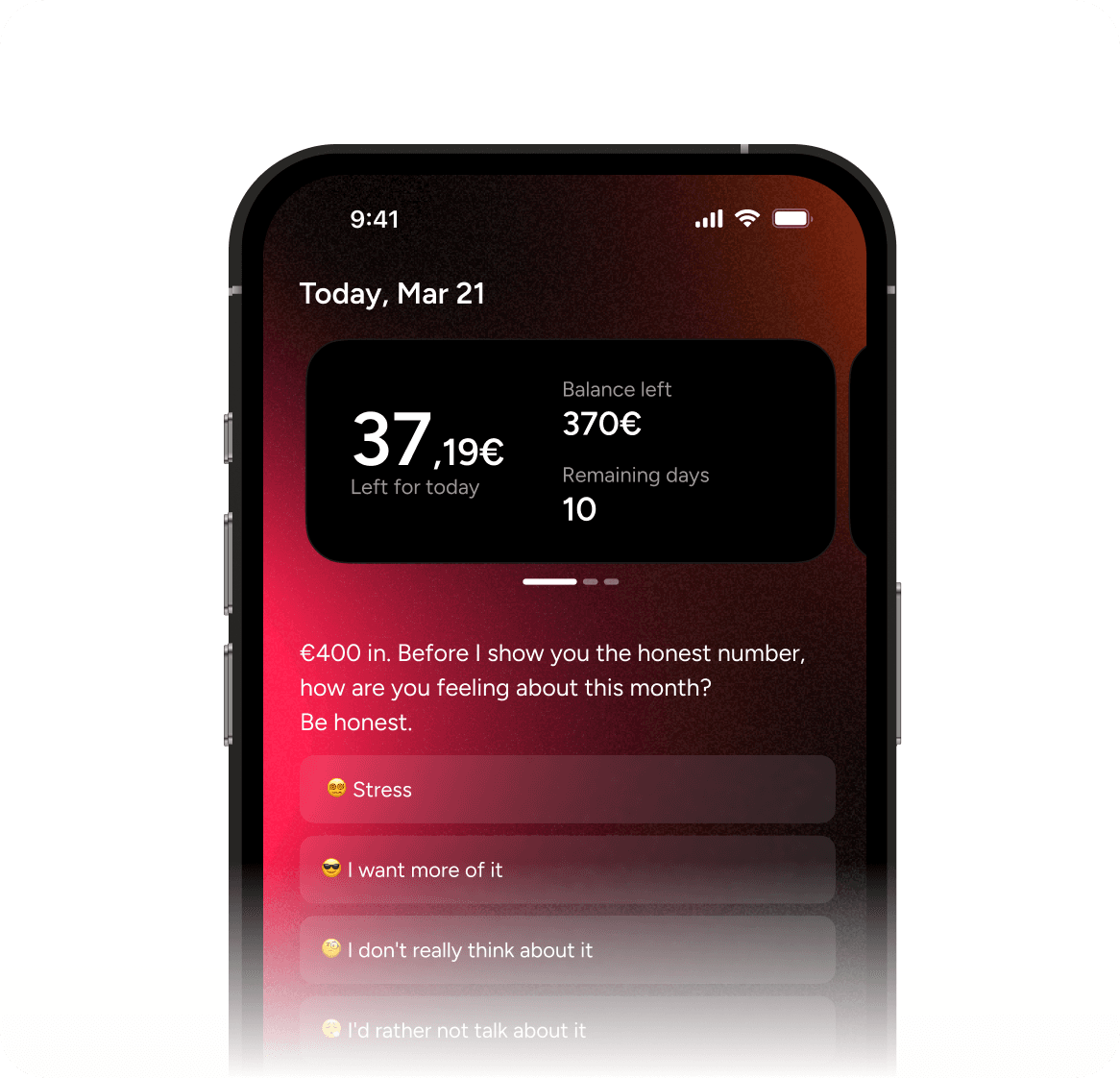
Kinta was built around a single insight: the best financial dashboard is the one you actually look at. That's why it's widget-based — you choose what appears on your home screen, arrange it the way you want, and remove anything that isn't relevant to your goals. With bank connectivity via open banking, data populates automatically. With Penny AI, you get daily insights surfaced in plain language. And because the interface adapts to you rather than the other way around, it stays useful as your financial situation evolves.
Conclusion
A great financial dashboard isn't the one with the most features. It's the one that makes the right information effortlessly visible, consistently, in the context of your specific goals. Build yours around what actually matters to you — and watch how much easier financial decisions become.